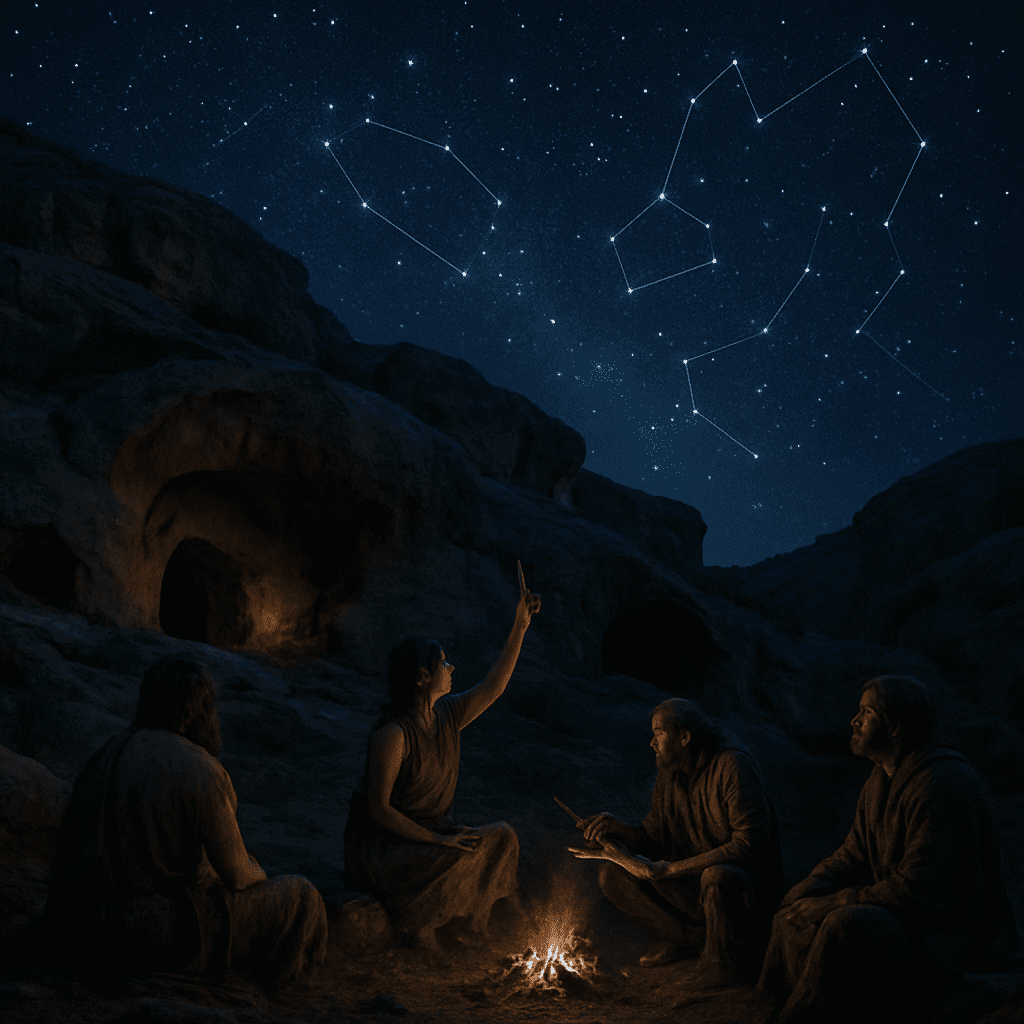
Ever since humans first looked up at the night sky, we’ve been fascinated by the stars. Imagine our ancestors sitting under a dark, open sky without city lights, watching thousands of glittering points moving across the heavens. Slowly, they began to notice patterns: the Sun rose and set at predictable times, the Moon changed shape every few nights, and certain stars appeared only during specific seasons. To them, these weren’t just distant lights. They were signs, messages, perhaps even divine guides. And so, what we now call astrology was born.
The Babylonians were among the first to give structure to this fascination. More than 4,000 years ago, they tracked planets and eclipses and tried to link them to events on Earth. If Mars appeared brighter than usual, perhaps it meant war was coming. If Jupiter shone high in the sky, it might signal prosperity. Kings and rulers often wouldn’t make a move without consulting the stars first.
Meanwhile, in India, astrology took on a deeply spiritual flavor. The ancient seers, the rishis, developed what we call Jyotish Shastra. For them, astrology wasn’t just about predicting the future—it was about understanding one’s karma and life path. They mapped out intricate systems of nakshatras, dashas, and planetary influences, creating detailed birth charts called kundalis. Even today, Indian families still rely on these charts when planning marriages, naming children, or choosing auspicious days for important events.
Far away in China, a different system was developing. Here, astrology merged with philosophy and the rhythms of nature. The Chinese zodiac came into being, assigning each year an animal that shaped a person’s destiny and personality. Instead of focusing on planetary positions alone, Chinese astrology connected the movements of the heavens with yin and yang, the five elements, and cycles of time. It became as much about balance and harmony as it was about prediction.
The Greeks, inspired by Babylonian knowledge, added their own touch. They created the twelve-sign zodiac we are most familiar with today. To them, Aries, Taurus, Gemini, and the rest weren’t just constellations, but archetypes that shaped human character. The Romans picked it up eagerly, and astrology soon spread across Europe, finding its way into daily life and even into the decisions of emperors.
Other cultures developed their own unique interpretations. Hebrew mystics wove astrology into the Kabbalah, connecting the stars with the soul’s spiritual journey. Mongolian traditions blended astrology with Buddhist beliefs. The Mayans, incredible sky-watchers themselves, built calendars so precise that they could predict eclipses centuries in advance, linking them with rituals and ceremonies.
What is truly fascinating is that across continents, without contact with one another, humans everywhere looked up at the sky and reached similar conclusions—that the stars and planets above were somehow connected with the lives we live below. Whether through dice, charts, or mystical calculations, people found meaning in the sky.
Today, in an age of technology and science, astrology continues to thrive. Some see it as unscientific, while others find comfort and guidance in its symbolism. But the core hasn’t changed much. Just as ancient people once gazed at the heavens and searched for patterns, we too look up and wonder what the stars might be saying about us.