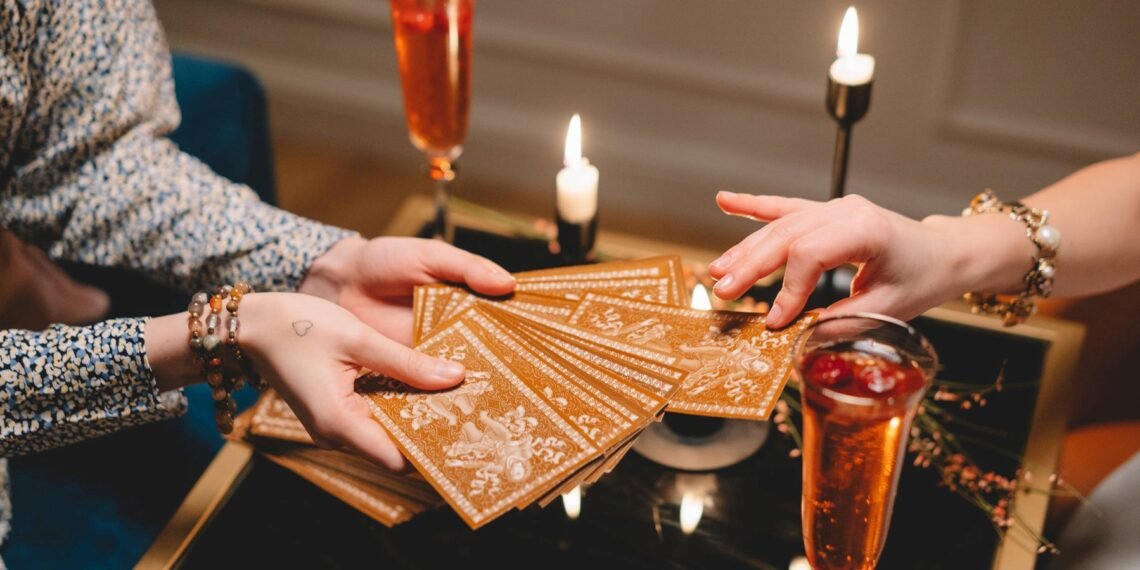
Tarot cards are one of the most fascinating tools for divination and self-discovery. They serve as a symbolic mirror, reflecting inner truths, subconscious thoughts, and possible future outcomes. While many associate tarot only with fortune-telling, it is also a profound spiritual and psychological guide.
Origins of Tarot Cards
The history of tarot can be traced back to 15th-century Europe. Initially, tarot decks were used as playing cards in Italy and France. Over time, mystics and occultists discovered their symbolic power and began using them as tools for divination and esoteric studies. By the 18th and 19th centuries, tarot became closely linked with astrology, numerology, and the Kabbalah, forming part of the Western mystical tradition.
Structure of a Tarot Deck
A standard tarot deck has 78 cards, divided into two main categories:
- Major Arcana (22 cards): Represent life’s spiritual lessons, archetypes, and transformative events. Famous cards include The Fool, The Lovers, Death, and The World.
- Minor Arcana (56 cards): Reflect everyday challenges, emotions, and actions. These are divided into four suits—Cups, Wands, Swords, and Pentacles—similar to playing cards.
Types of Tarot Decks
Over time, tarot evolved into different styles, such as:
- Rider-Waite Tarot: The most widely used and beginner-friendly deck, illustrated with rich symbolism.
- Thoth Tarot: Designed by Aleister Crowley, focusing on esoteric and mystical elements.
- Marseille Tarot: A historic deck originating in France, known for its classical artwork.
- Modern Themed Decks: Today, tarot decks come in countless artistic variations—angel tarot, animal tarot, and oracle hybrids.
Uses of Tarot Cards
Tarot is not about predicting fate in an absolute sense—it is about gaining clarity and insight. Common uses include:
- Self-reflection and meditation
- Understanding relationships and career choices
- Spiritual growth and healing
- Unlocking hidden fears, desires, and strengths
- Guiding decision-making during uncertainty
Conclusion
Tarot cards are a bridge between the conscious and subconscious mind. Whether used for guidance, meditation, or personal exploration, tarot continues to inspire seekers around the world with its timeless wisdom and symbolic language.